
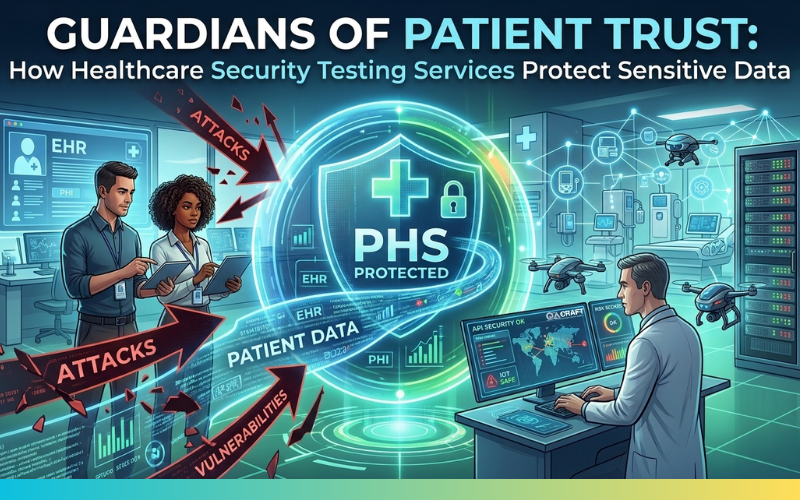
The healthcare industry in targeted industry for cyberattacks. There are many hospitals, clinics, and health there which have large volumes of data regarding patient history. A minor mistake can cause a large volume of data loss.
So in such a situation, healthcare security plays a vital role in protecting against data loss. It helps organizations to detect issues and fix them as a priority as preventive action.
Why Healthcare Data Needs Strong Protection
Healthcare data is misused on the black market. As Credit card numbers are easily replaced, it is not possible to modify medical records.
It contains
- Personal identification details
- Diagnostic record and medication detail
- Insurance detail and invoice history
- Payment history
Because of minor security gaps, this data can be used by identity thieves. This can lead to money fraud and reputational damage. So Patient data security testing is a continuous procedure, not a one-time activity.
What Is Healthcare Security Testing?
Healthcare security testing is a structured process to rectify the security of healthcare systems and applications.
It makes sure that digital platforms store and process patient information or data to secure against cyberattacks.
It includes:
- Vulnerability assessments
- Penetration testing
- Application security testing
- Network security testing
- Cloud security evaluations
- Medical device security testing
Together, these practices build strong protection for overall healthcare application security.

Key Components of Patient Data Security Testing
1. Application Security Testing
Healthcare applications such as patient portals, telemedicine platforms, and mobile apps need to be secured by the following list of applications:
- Static application security testing (SAST)
- Dynamic application security testing (DAST)
- API security testing
- Authentication and authorization testing
This makes sure that sensitive patient data is secure from unauthorized use.
2. Network Security Testing
Hospitals have complex networks like pathology labs, medical device agencies, and administrative systems. Healthcare security testing can evaluate:
- Firewall configurations
- Network segmentation
- Intrusion detection systems
- Remote access controls
This minimizes the risk of lateral movement during cyberattacks.
3. Penetration Testing
Ethical hackers observe real-world attacks to identify and rectify weaknesses.
Penetration Testing helps in the following manner.
- Understand attack paths
- Fix critical vulnerabilities
- Strengthen incident response readiness
This proactive approach improves patient data security testing effectiveness.
4. Compliance and Regulatory Validation
Healthcare organizations are established to manage and secure strict data protection regulations. Security testing works for:
- Data protection laws
- Industry standards
- Privacy regulations
Compliance not only prevents penalties but also gains patient trust.
How Healthcare Security Testing Protects Sensitive Data
Healthcare security testing services secure patient data by:
- Identifying vulnerabilities before attackers misuse them
- Enforcing strong encryption practices
- Strengthening access control mechanisms
- Securing APIs used for data exchange
- Monitoring suspicious activity in real time
- Validating secure deployment and cloud configurations
With the integration of security testing into each stage of development and operations, healthcare providers move from reactive defense to preventive actions.
Real-World Risk Scenario
Imagine a hospital launching a new online appointment system. Without proper healthcare, application security testing:
- Weak password policies may allow unauthorized access
- APIs could expose patient records
- Misconfigured cloud storage may leak sensitive data
With planned healthcare security testing, these issues are discovered and fixed before going live, preventing data breaches and operational disruption.
Benefits of Continuous Healthcare Security Testing
- Minimizes risk of ransomware attacks
- Boost regulatory compliance
- Enhanced patient trust
- Lower long-term security costs
- Strengthen brand reputation
In today’s digital healthcare environment, security is not optional—it is foundational.
Conclusion
Healthcare security testing services are necessary to secure sensitive patient data.
Through comprehensive patient data testing and securing patient data and robust healthcare application security practices, organizations.
As cyber threats can happen multiple times, healthcare security testing applies the most effective strategy to provide protection to the portal.

